


Responsible Gaming on BC Game
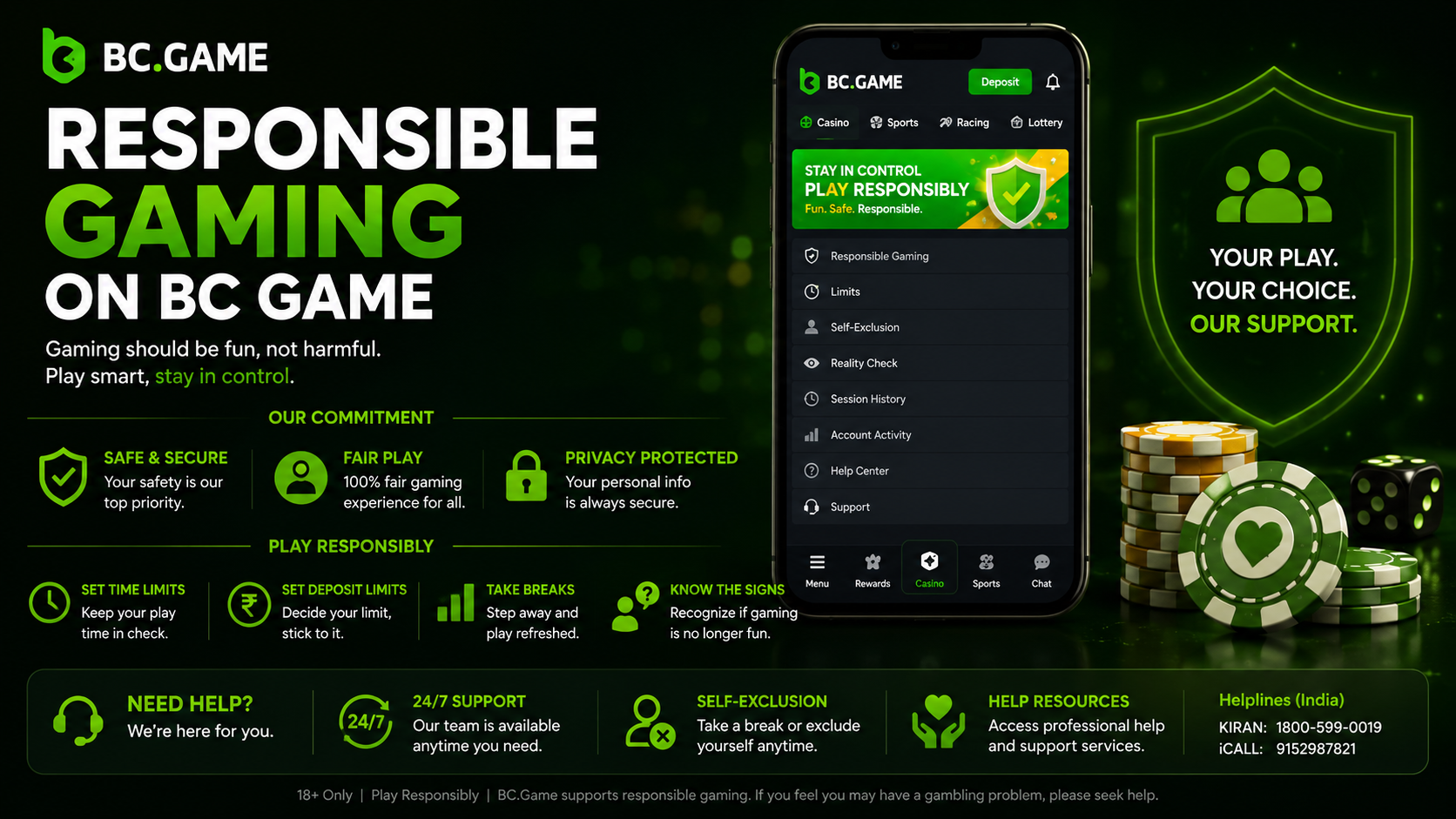
Responsible gaming means approaching casino games and sports betting with a clear understanding that you will most likely lose money over time, and structuring your play so that losing does not damage your financial stability, mental health or personal relationships. It is not a feature you turn on — it is a mindset you bring to every session. The house edge exists in every game, volatility ensures that short-term results are unpredictable, and even provably fair verification only confirms that results were generated honestly, not that they will be profitable. Bonuses, strategies and experience do not eliminate these mathematical realities. If you choose to play, responsible gaming is about controlling what you can — budget, time, behaviour — while accepting what you cannot.
Gambling Is Entertainment, Not Income
Casino games and sports betting should be treated as entertainment with a cost, the same way you would think about a concert ticket or a night out. The money you spend is the price of the experience, not an investment with expected returns. Even experienced users lose money because of house edge, volatility and the impulsive decisions that fast-paced games provoke. If you are playing to make money, pay bills or recover financial losses — you have already crossed a line that responsible gaming is designed to prevent.
Risk Exists in Every Game Type
Slots carry risk through volatility and rapid spin cycles. Crash games carry risk through fast multiplier rounds and the temptation to chase higher numbers. Live casino carries risk through continuous play and social pressure at tables. Sportsbook carries risk through overconfidence, accumulator bets and live betting impulses. BC Originals like Dice, Limbo and Plinko carry risk through their speed and simplicity. Bonus play carries risk because wagering requirements push you to bet more than you otherwise would. No format is inherently safer than another — they simply distribute risk differently across time, bet size and decision frequency.
Player Limits and Budget Control
Limits are the most practical tool available for keeping gambling within boundaries you set when you are thinking clearly — before adrenaline, frustration or the “one more round” impulse takes over. The principle is simple: decide what you can afford to lose before you start, and stop when you reach that number. Limits do not guarantee you will not lose money — they guarantee that your losses stay within a range you defined while rational. Every type of limit addresses a different aspect of control, and using multiple limits together provides stronger protection than any single one alone.
Deposit Limits
Deposit limits cap how much money you can add to your account within a specific timeframe — daily, weekly or monthly. If the BC Game platform offers deposit limit tools, they should be accessible through account settings or a responsible gaming section. Setting a deposit limit when your balance is full and your judgement is clear prevents the pattern of topping up impulsively after losses, which is one of the most common paths to spending more than intended.
Loss Limits
A stop-loss is the maximum amount you are willing to lose in a single session. Set it before you place your first bet — not after a losing streak when your judgement is compromised and the impulse to “win it back” is strongest. When you hit your stop-loss number, stop playing. Not “one more round.” Not “let me try a different game.” Stop. The limit only works if you actually respect it, and the only reliable way to respect it is to commit before the session begins.
Session Time Limits
Time passes differently when you are gambling, especially in fast-round formats like Crash, Limbo and Dice where dozens of bets can happen in minutes. Set a session duration before you start — thirty minutes, one hour, whatever fits your schedule — and stick to it. Take breaks between sessions. Do not play late at night when tiredness reduces impulse control. If you look up and realise you have been playing for three hours without noticing, that is a warning sign, not a sign that you are having fun.
Signs of Problem Gambling
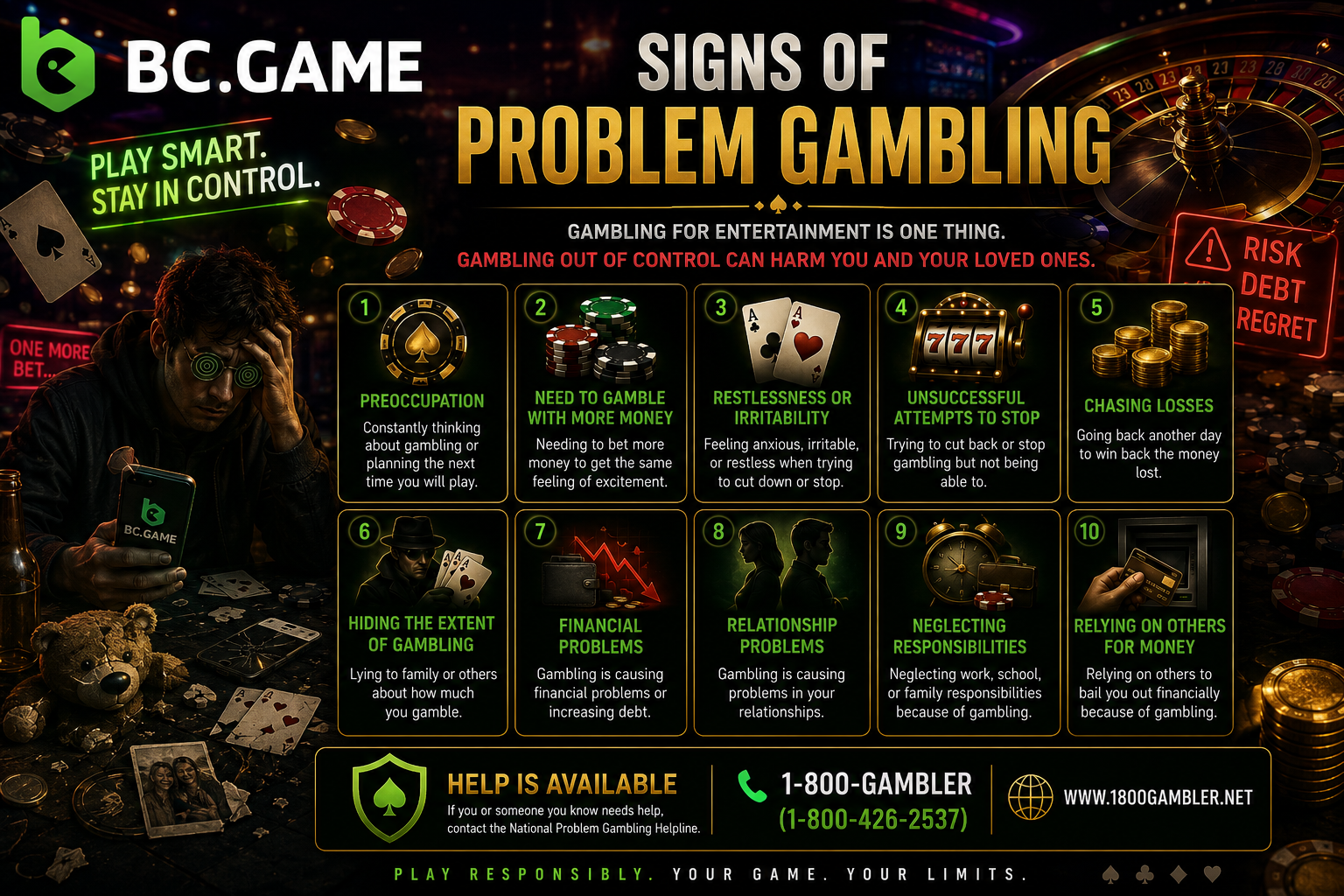
Problem gambling does not arrive with a warning label. It develops gradually through patterns that feel normal at first and become destructive over time. Recognising the signs early — in yourself or someone you know — is the most effective form of prevention. None of the following signs require a clinical diagnosis to take seriously. Any single one is enough reason to step back and reassess your relationship with gambling.
Chasing Losses
The most common and most destructive pattern. You lose money, so you increase your next bet to recover the loss quickly. That bet also loses. Now you are down more, the impulse to recover is stronger, and the bets keep getting bigger. This escalation almost never ends with recovery — it ends with losses significantly larger than the original amount you were trying to win back. If you catch yourself raising bets after losses, stop playing immediately.
Losing Track of Time and Money
You started with ₹2,000 and planned to play for thirty minutes. Two hours later, you check your balance and ₹8,000 is gone. This happens most often in fast-round games and live betting, where the gap between decisions is so short that cumulative spending becomes invisible until you look at the total. If you regularly lose track of how much time or money you have spent during a session, that disconnect between intention and reality is a warning sign.
Gambling With Money Needed Elsewhere
If you are betting with rent money, grocery money, loan payments, savings, education funds or money set aside for family needs — the problem is not the game, the platform or your strategy. The problem is that gambling has moved from entertainment to financial threat. No round, no multiplier, no bonus and no “feeling” about the next result justifies risking money that has a designated purpose outside of gambling.
Self-Exclusion and Account Restrictions
When setting personal limits is not enough — because the limits get ignored, overridden or rationalised away — more structural measures exist to restrict access to gambling entirely for a defined period. These tools remove the option to play, which is sometimes the only way to break a pattern that willpower alone cannot interrupt. If BC Game offers self-exclusion or cooling-off features, they should be accessible through account settings or the responsible gaming section. If you cannot find them, contact platform support directly.
Cooling-Off Period
A cooling-off period is a temporary pause from gambling — typically 24 hours, a few days or a week. It is designed for moments when you feel control slipping: frustration after losses, the urge to deposit more than planned, or the realisation that you have been playing longer than intended. The pause gives you distance from the decision-making state that gambling creates, allowing rational thinking to return before you re-engage.
Self-Exclusion
Self-exclusion is a longer-term restriction that blocks access to your account for weeks, months or indefinitely. It is a more serious step than a cooling-off period and is appropriate when the pattern of problematic play has become persistent rather than occasional. Reopening a self-excluded account typically requires a waiting period and a deliberate request, which adds a barrier between impulse and action.
Contacting Support for Restrictions
If you cannot locate limit settings or self-exclusion options in your account, contact BC Game support directly through the platform’s official channels. Do not contact third-party websites (including this one) for account restrictions — we do not have access to your account and cannot implement any changes on your behalf. Platform support is the only channel that can modify your account settings.
Bonuses and Responsible Gaming

Bonuses are not free money. They are promotional tools with conditions attached, and those conditions — wagering requirements, time limits, eligible games, maximum cashout — are specifically designed to require additional play before any value can be extracted. Understanding this relationship between bonuses and play volume is essential for responsible gaming, because bonuses can create pressure to play more than you originally planned in order to meet conditions you did not fully read before activating.
Bonus Terms Can Increase Play Volume
A 100% match bonus on a ₹5,000 deposit with 30x wagering means you need to place ₹150,000 in bets before withdrawing bonus winnings. That is not “free money” — it is a commitment to significant additional gambling volume. Understanding the wagering math before activating ensures you are making an informed decision rather than being surprised later.
Deposit Decisions Before Bonus Claims
Depositing money specifically because a bonus is available — rather than because you planned to play anyway — is a responsible gaming red flag. If you would not have deposited without the bonus, the bonus is driving your behaviour rather than enhancing an existing plan. That inversion of control is exactly what responsible gaming is designed to prevent.
Crash Games, Fast Bets and Impulse Control
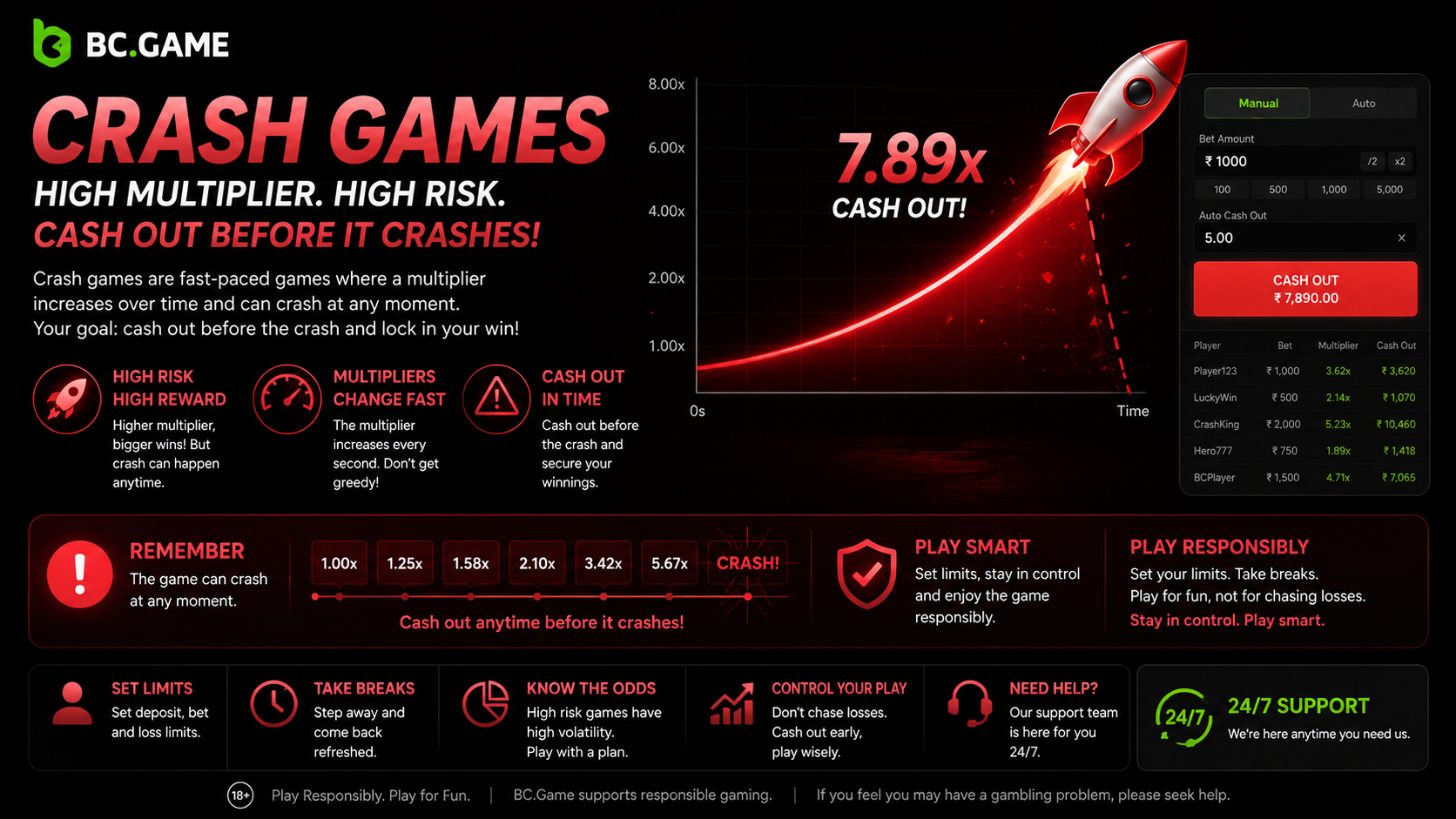
Fast-round games deserve a separate responsible gaming conversation because their speed amplifies every impulsive tendency that slower games leave time to counteract. When a round takes three seconds and the next one starts immediately, the gap between “I should stop” and “I already bet again” shrinks to nothing. Crash, Limbo, Dice, Plinko and live betting all share this characteristic of compressing decision time, which makes pre-set limits and auto-play controls critically important for anyone playing these formats.
Fast Rounds Increase Risk
Fifty rounds in ten minutes is not unusual in crash games. Each round is a real-money bet. The speed makes cumulative spending feel invisible because individual bets are small — but fifty small bets add up to a significant total that only becomes apparent when you check your balance after the session.
Auto Bet and Auto Play Risks
Auto bet places your stake automatically round after round without requiring a click. Combined with auto cashout, it runs entirely hands-free — which means your phone can burn through your balance while you are not actively watching. Always set stop-loss conditions, win limits and maximum round counts before enabling auto-play. If the game does not offer these controls, do not use auto-play.
High Multipliers and Chasing Behavior
The promise of a 50x or 100x multiplier creates a psychological trap: you keep betting through losses because the “big hit” feels imminent. It is not imminent. High multipliers hit rarely and unpredictably, and the accumulated losses while waiting for one often exceed the payout when it finally arrives. Do not let multiplier screenshots on social media set your expectations.
Underage Gambling Prevention
Gambling is restricted to adults who meet the age and eligibility requirements of their jurisdiction and the platform. Minors must not have access to gambling accounts, and account holders are responsible for preventing unauthorised use of their devices and credentials.
Age and Eligibility Checks
Users must meet the age requirements set by BC Game and comply with any regional regulations applicable to their location. The platform may request identity verification at registration or before withdrawal to confirm eligibility. Providing false age information during registration violates platform terms and may result in account closure.
Protecting Shared Devices
If your phone, tablet or computer is used by other people — including children — take steps to prevent access to your BC Game account. Do not save passwords in the browser on shared devices. Log out after every session. Use device screen locks and app-level passwords where available. Ensure that no one else can open your account, place bets or access your balance without your knowledge.
Account Safety and Responsible Play
Responsible gaming is not only about controlling your betting behaviour — it also means protecting your account from external threats that exploit the same vulnerabilities. Fake mirrors, phishing pages, mod APKs and bonus scams do not just steal money through fraud; they also create situations where users feel pressured to deposit more to “recover” what was stolen, which compounds the original loss with gambling losses.
Avoid Fake Bonus and Predictor Scams
Fake promo codes, crash predictors, hash hack tools, mod APKs and “guaranteed win” signal groups are scams designed to steal credentials or money. They are not responsible gaming tools, they are not strategies, and they do not work. Engaging with them creates financial risk on top of the inherent gambling risk you are already accepting.
Keep Login Details Private
Your password, 2FA codes, private keys and wallet seed phrase should never be shared with anyone — not platform support (who will never ask), not Telegram administrators, not forum moderators, not anyone who contacts you first. Account security is a prerequisite for responsible gaming, because a compromised account eliminates every limit and safeguard you have put in place.
Getting Help for Gambling Problems
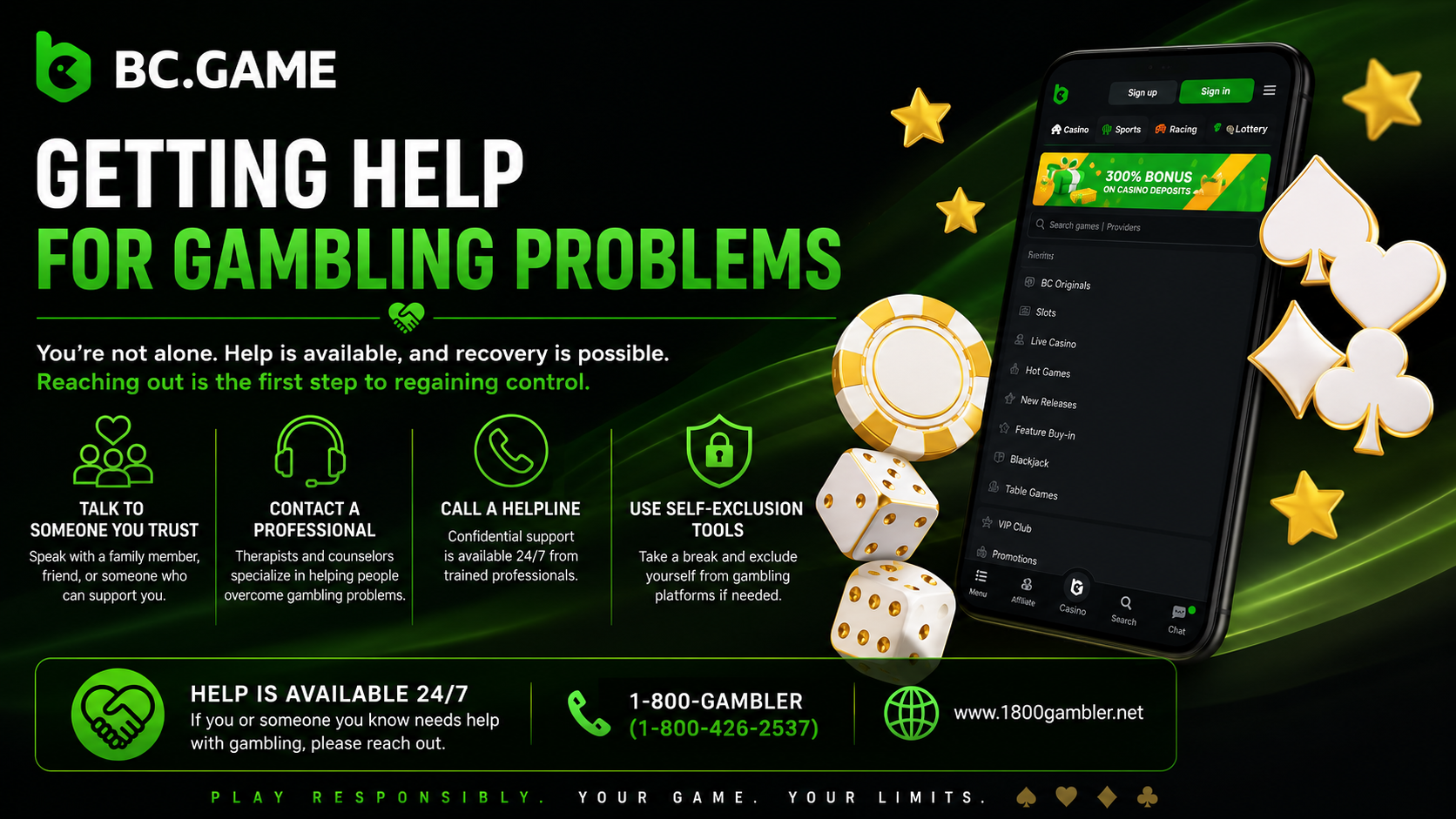
If gambling has stopped being entertainment and started causing financial stress, anxiety, relationship problems, sleep disruption, work interference or a persistent feeling that you cannot stop — these are signals that professional support may be needed. Asking for help is not a sign of weakness. It is a practical step toward regaining control over a situation that is designed to be difficult to control.
Talk to Someone Outside the Game
Reach out to someone you trust — a friend, family member, financial counsellor or a dedicated gambling support organisation. Talking about the situation outside the gambling environment breaks the isolation that problem gambling creates. Many support services are confidential and available at no cost.
Use Blocking and Limit Tools
Beyond platform-level limits, consider additional measures: gambling-blocking software on your devices, bank-level gambling transaction blocks if your financial institution offers them, removing saved payment methods from your account, and deleting bookmarks and shortcuts to gambling sites. Each barrier adds friction between impulse and action, and friction is your ally.
Stop Before the Damage Gets Bigger
If gambling is already affecting your money, sleep, work, relationships or mood — continuing is not a strategy, it is a deepening problem. The most effective action is the simplest: stop. Not after the next round, not after you recover yesterday’s losses, not when a promotion expires. Now. Every additional session while the pattern is active makes the situation harder to resolve, not easier.
Responsible Gaming Disclaimer
This website is an independent informational resource, not an operator of BC Game and not a gambling support service. The content on this page does not constitute financial, legal or medical advice. Users are solely responsible for complying with the rules of the platform they use, the laws applicable in their region, and the management of their own gambling behaviour. If you are experiencing gambling-related difficulties, contact a professional support organisation or the official support channels of the platform you are using.